

Case study · TrailBlazer Tack
A trade website and back office for a made-to-order saddlery exporter
A Kanpur workshop that makes saddlery to order for equestrian brands abroad. We built the website its trade buyers judge it by, and the back office behind it.
- Industry
- Equestrian manufacturing & export
- Based in
- Kanpur, India
- Scope
- Design · Development · Admin panel · Technical SEO
- Launched
- September 2026
- Kickoff to launch
- 4 weeks
- Live site
- trailblazertack.com
The brief
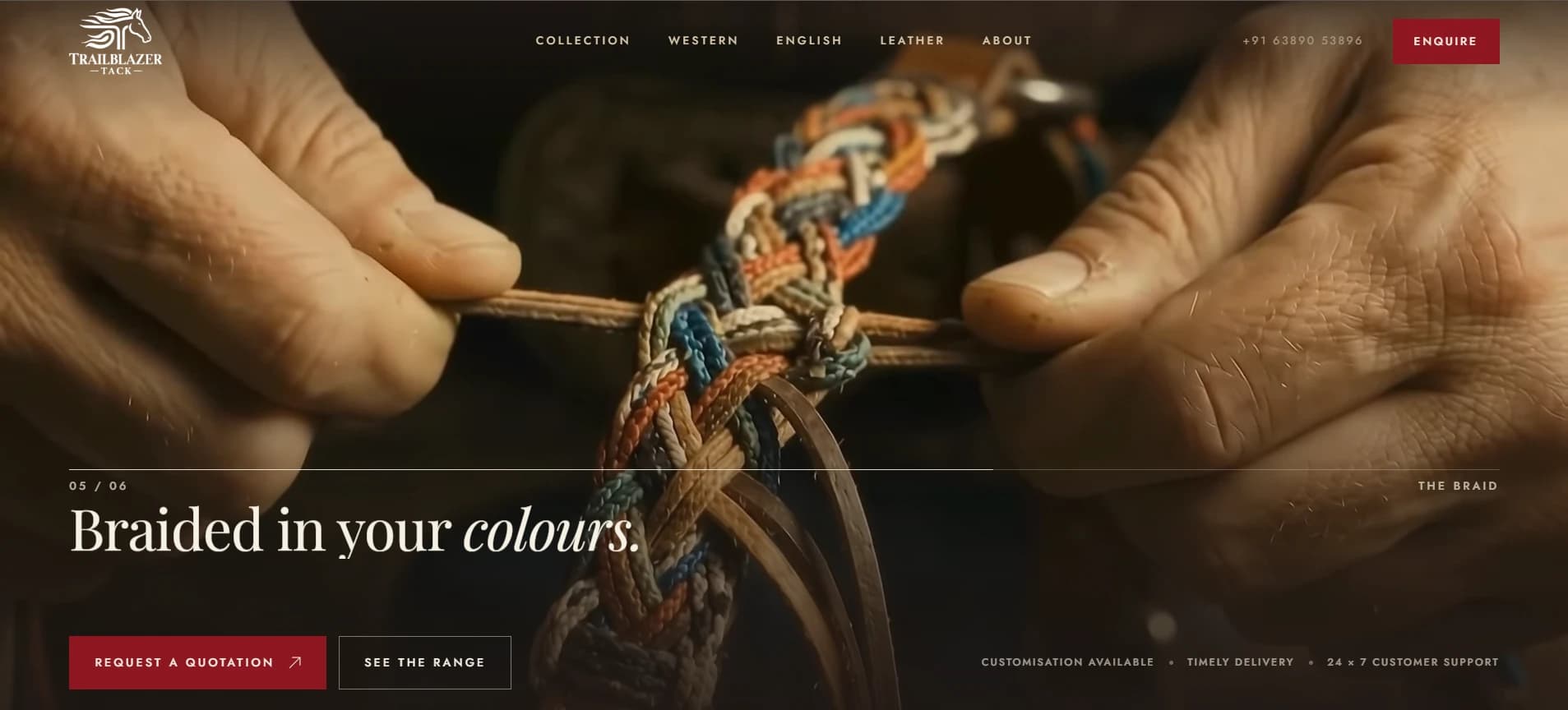
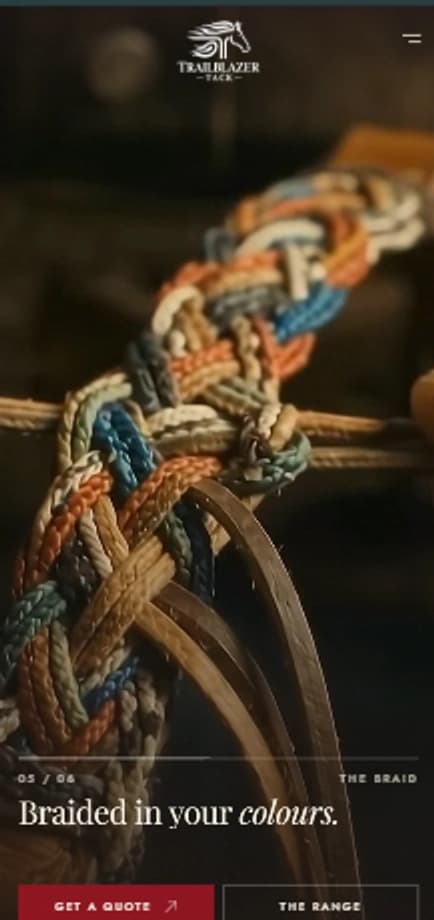
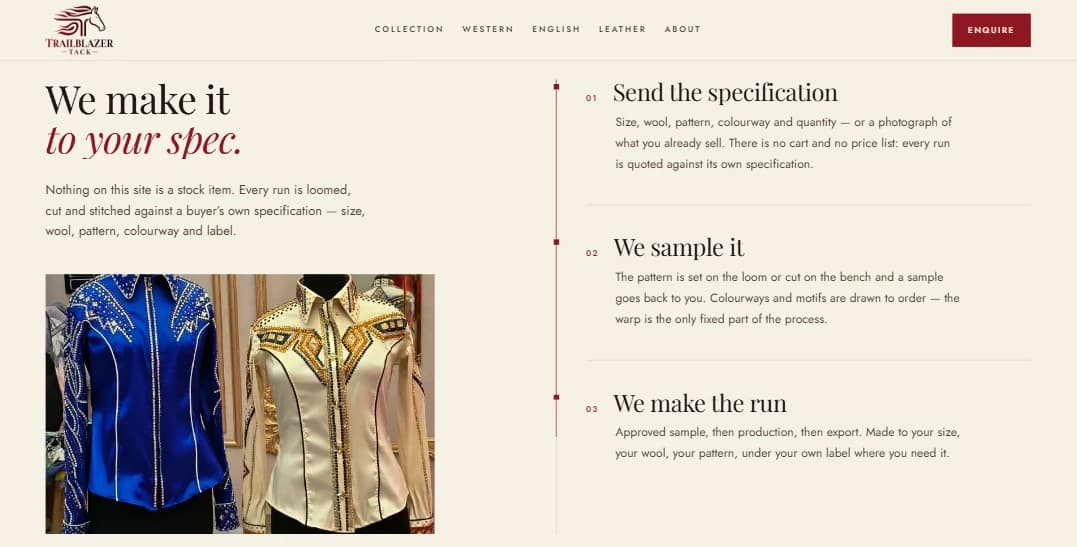
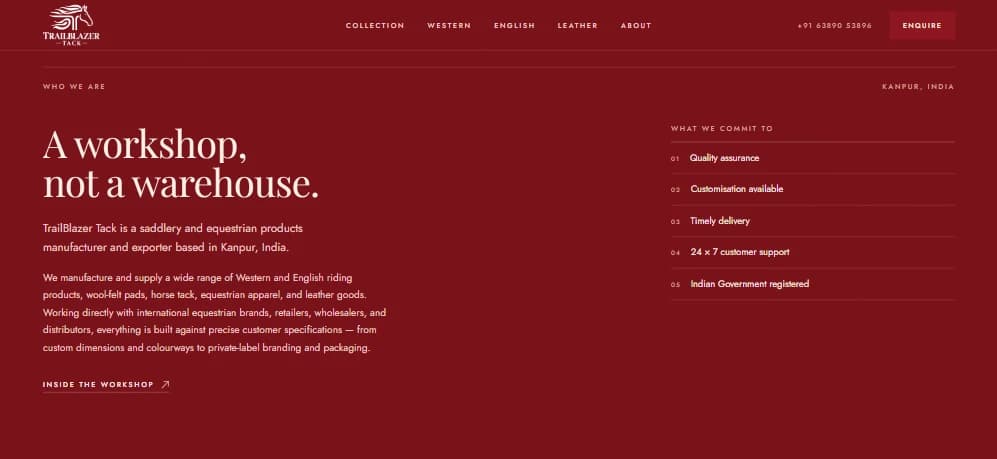
TrailBlazer Tack is a saddlery and leather workshop in Kanpur. It makes Western and English tack, saddle pads, rugs and leather goods to order — for equestrian brands, retailers and distributors abroad, often under the buyer's own label.
Nothing it sells is a stock item, so a shop with a cart was never the answer. Trade buyers vet a supplier online long before they send a specification. The site had to make a workshop in Kanpur read as a partner worth trusting with one, and turn the right visit into an enquiry the workshop could price.
And it had to be something the team could run themselves — adding pieces, answering enquiries — without waiting on a developer.
What we built
Built around how the trade actually buys.
- 01
Organised the way buyers shop
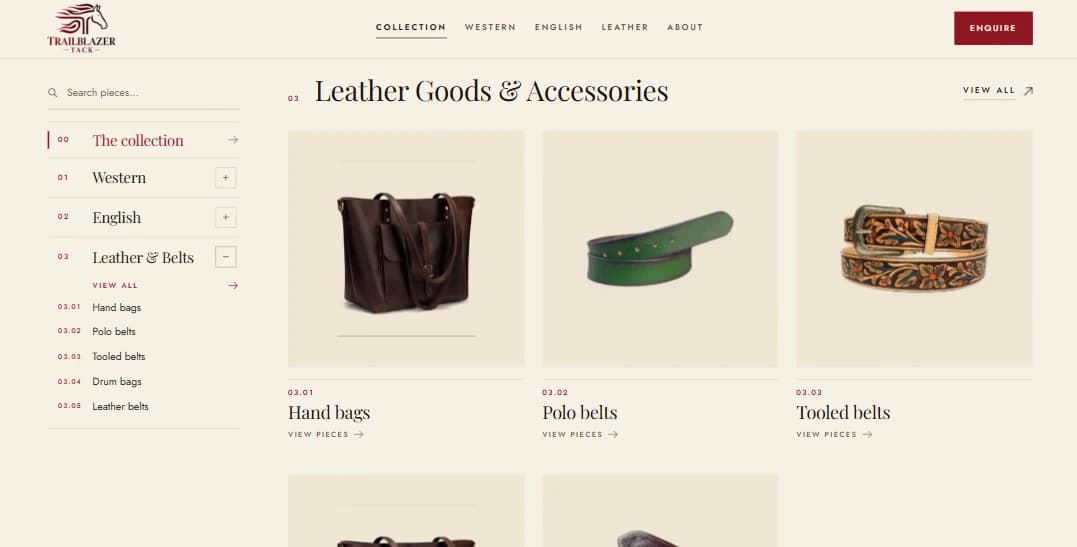
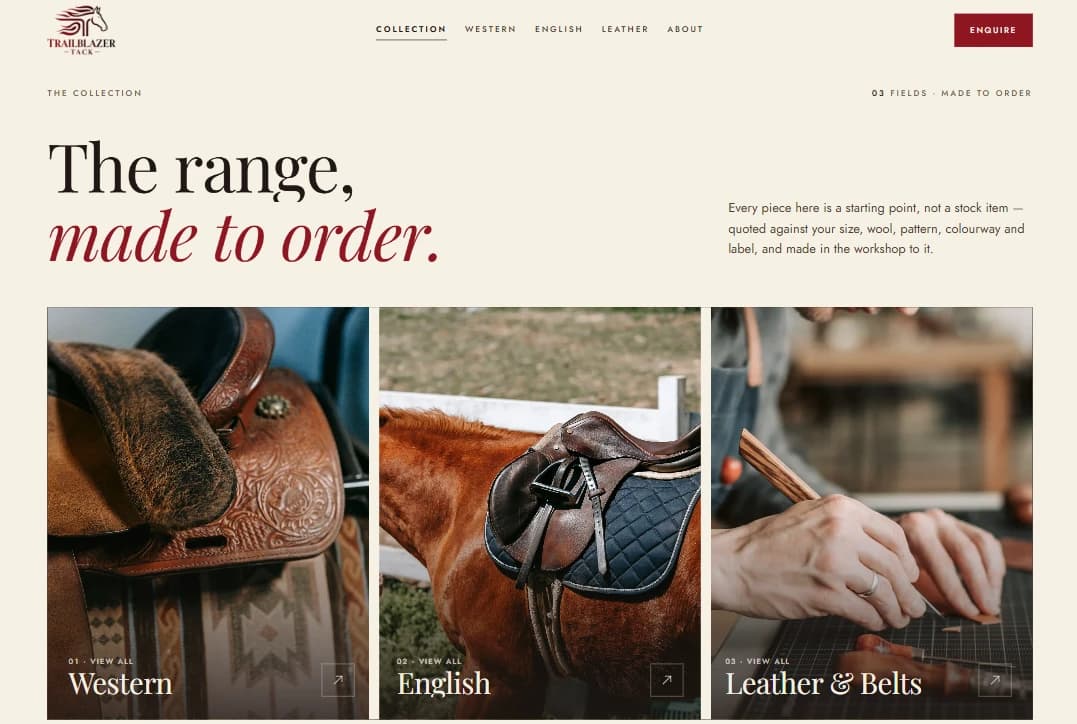
Three fields — Western, English, and Leather & Belts — with every product line indexed beneath them and one search across the lot. A buyer who knows what they want is a couple of clicks from it; one who doesn't can read the whole range on a single page.
- 02
Specified before anyone asks
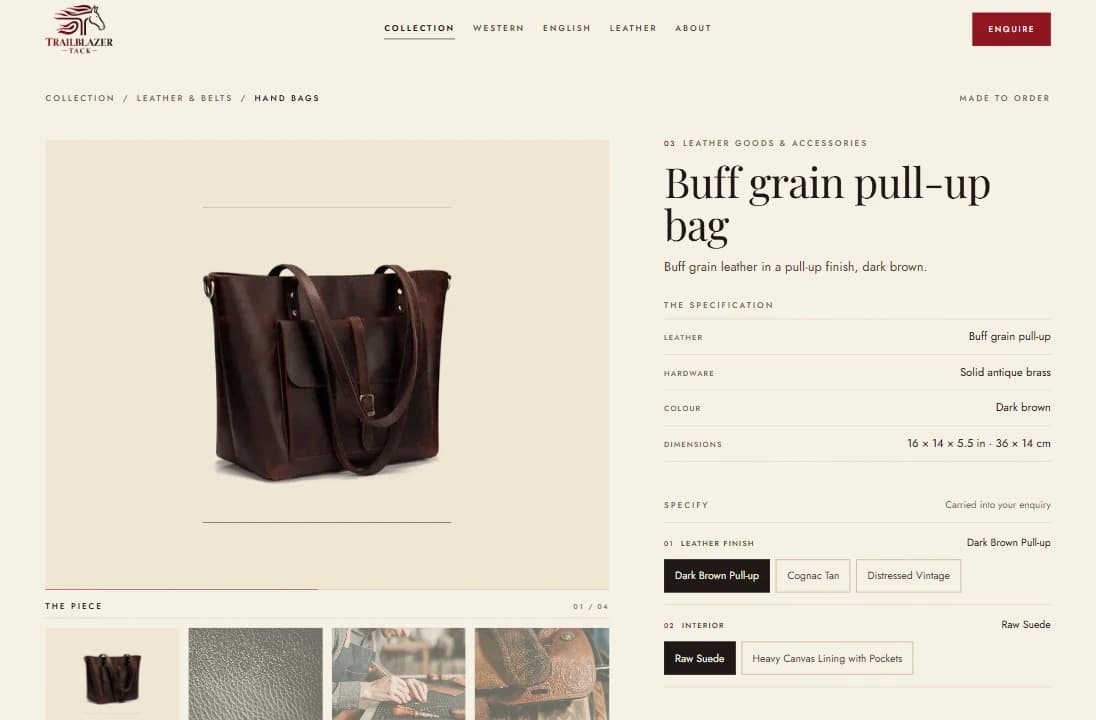
Each piece carries its specification — material, dimensions, weave, origin — and the options a buyer can change, from leather finish to interior. The questions a buyer would otherwise have to email about are answered on the page.
- 03
Enquiries that arrive ready to price
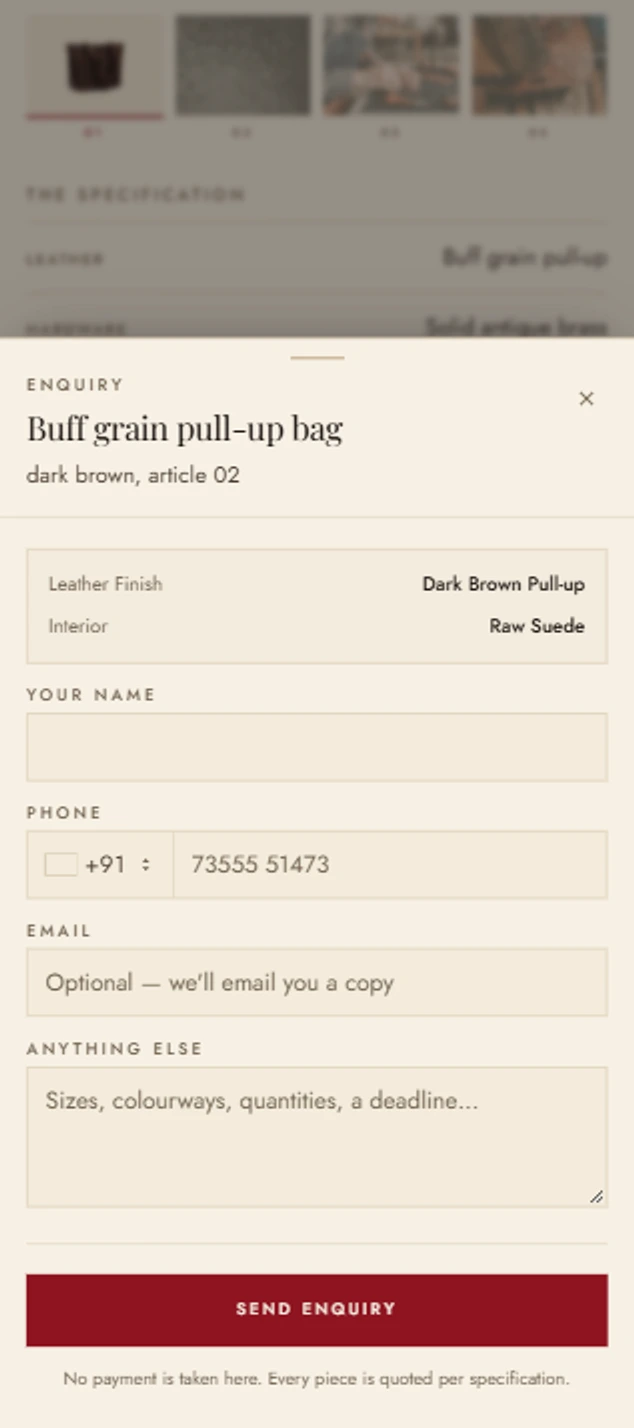
Whatever the buyer chose travels into the enquiry. The workshop receives it by email with Reply going straight to the buyer, the buyer gets a copy, and nobody is asked to pay — every piece is quoted per specification.
- 04
Links that look right when shared
In this trade, pieces get passed around on WhatsApp. Every product and category renders its own preview card — the piece on the site's paper beside the TrailBlazer mark — so a shared link opens as a large picture, not a thumbnail on a black ground.
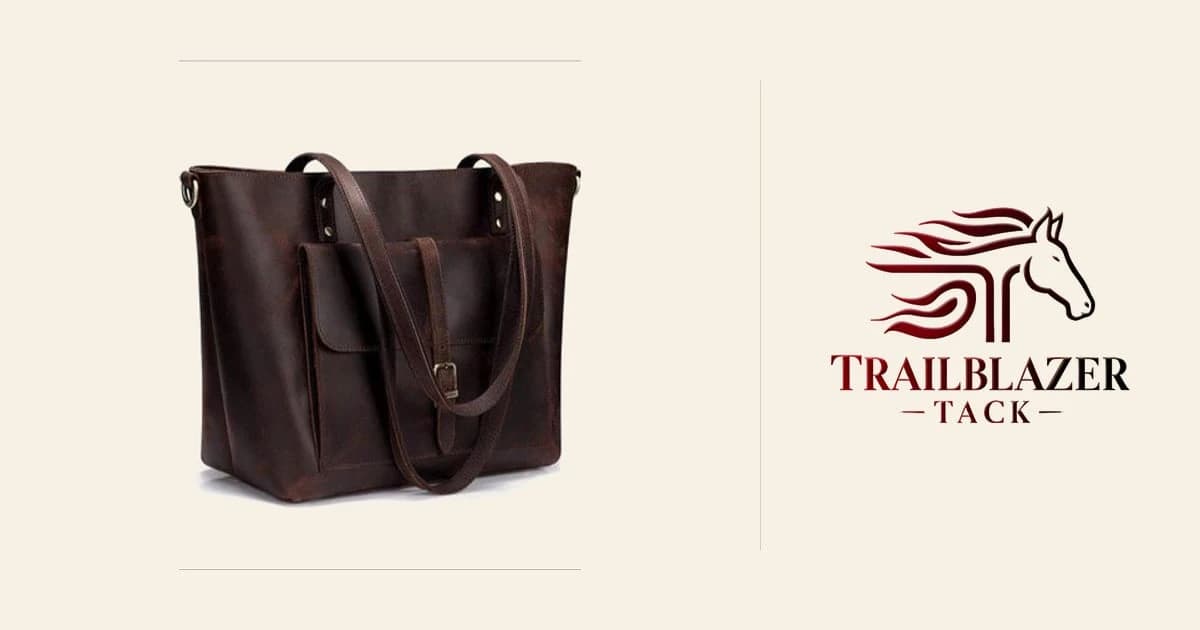
What a shared product link opens into.
Also in the build
WhatsApp, counted
A tap through to WhatsApp is logged as a lead beside the form enquiries, so conversations that start off the site still show up in the numbers.
One list for every enquiry
Both channels land in a single list the team can filter by status and export to a spreadsheet.
A back office they run
Pieces, categories and photographs are managed from a private admin, signed into with a one-time email code. Adding a product is a form, not a developer's afternoon.
Legible to search engines
Every product is described in structured data — specification, brand, breadcrumb — alongside the catalogue and the FAQ, so the pages can surface for what the workshop actually makes.
Under the hood
Start a project
Building something like this?
A paragraph is enough to start. You will get a real reply with an approach, a fixed price and a timeline — not a calendar link and a discovery call.
Want to see more range? Our concepts are fictional brands, built as real sites.